Winter Car Accidents in New Jersey: Why Bad Weather Doesn't Excuse Negligent Driving
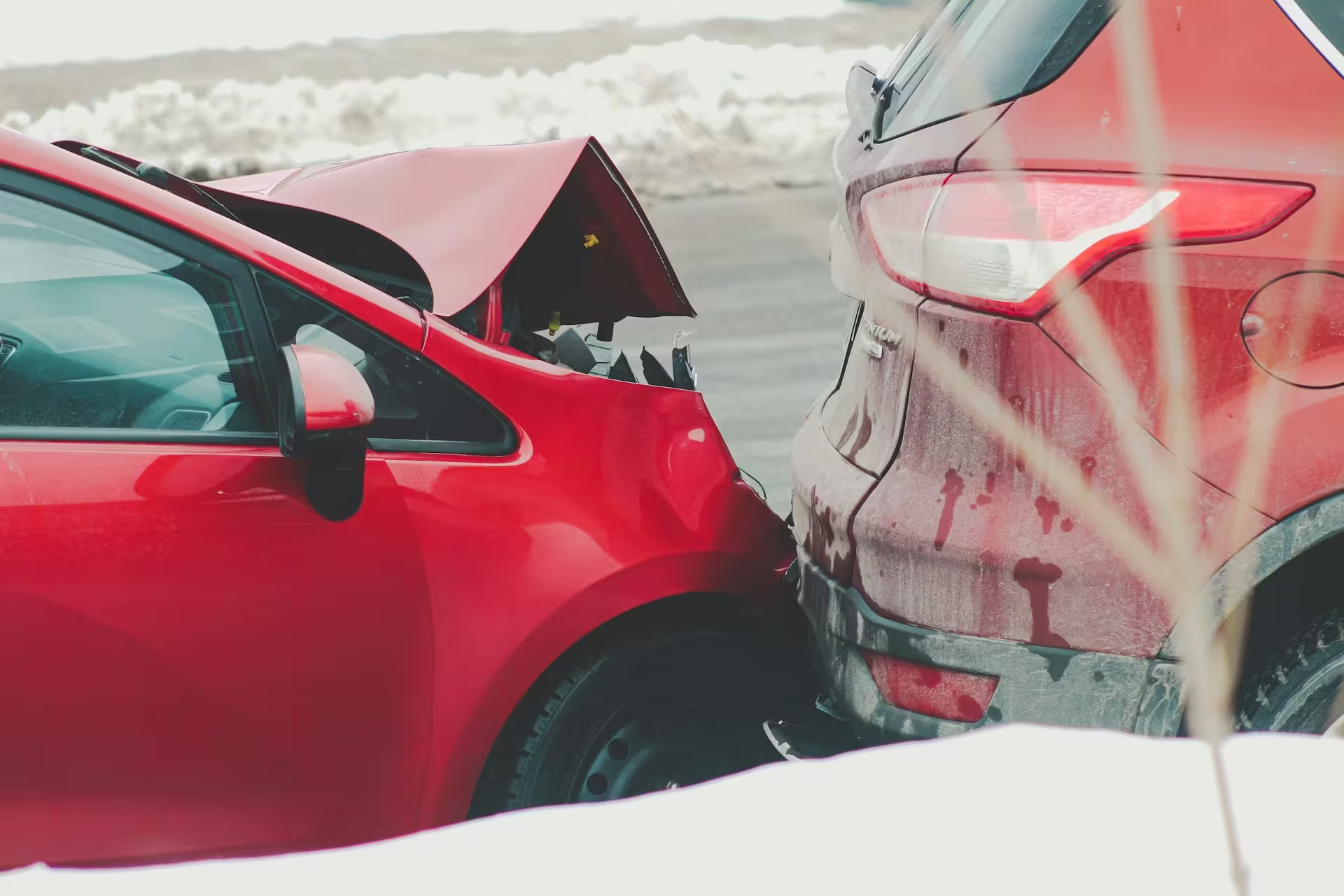
Under New Jersey law, winter weather is not an excuse for negligent driving. Such weather creates hazardous driving conditions across New Jersey, and snow, ice, sleet, and reduced visibility contribute to a spike in serious car accidents. These crashes often leave victims with serious physical injuries, mounting medical bills, and long-term disruptions to their daily lives.
Under New Jersey law, dangerous weather conditions do not excuse negligent behavior. Motorists are still required to adjust their speed, maintain control of their vehicles, and drive with reasonable care for the safety of others. When drivers fail to do so, injured victims have the right to pursue compensation for their losses. Even so, they must prove that the actions of the negligent party were a proximate cause of the collision and contributed to the crash and their losses.
At Levinson Axelrod, our experienced car accident attorneys may be able to help you after the collision. We can assist injured drivers and passengers pursue claims, gather evidence, and recover the compensation you deserve to recover your losses.
Winter Car Accidents in New Jersey
Winter driving in New Jersey presents unique hazards, and accidents often spike during snowstorms, ice events, and freezing rain. Understanding the common causes of winter collisions helps illustrate why victims have legal rights when crashes occur due to negligent driving in winter conditions.
Some of the most frequent causes include:
- Speeding on icy or snowy roads: Many drivers fail to properly adjust their speed for slippery surfaces, leading to loss of control or collisions.
- Following too closely: Reduced traction makes stopping distances longer. Tailgating or following too closely on slick roads often results in rear-end crashes and accidents.
- Poor vehicle maintenance: Worn tires, faulty brakes, or ineffective windshield wipers substantially increase the likelihood of accidents.
- Careless driving: Sudden lane changes, failure to signal, or ignoring winter hazards can lead to collisions.
- Impaired driving: Alcohol or drug impairment dramatically reduces reaction time and judgment, especially in hazardous winter conditions.
- Distracted driving: Phones, GPS, or other distractions become even more dangerous when roads are slick or visibility is low.
Common Insurance Industry Excuses and Legal Responses
After a winter motor vehicle crash, insurance companies may attempt to minimize or deny claims by using common excuses. These often include:
- The weather caused the accident, not our driver.
Rebuttal: Winter weather is not an excuse. While winter weather can create certain hazards, negligent driving in winter conditions, such as speeding or failing to adjust for ice and snow conditions, remains the primary responsibility of drivers. - The victim should have driven more cautiously.
Rebuttal: While the comparative negligence of the accident victim is something to consider, New Jersey law still requires drivers to exercise reasonable care for others, even in winter conditions. - There’s no clear proof of fault.
Rebuttal: The facts of the case, along with physical evidence such as property damage, skid marks, traffic camera footage, and witness statements can be used to establish liability, especially when multiple vehicles or road conditions are involved. - The other vehicle was not properly maintained.
Rebuttal: While a vehicle’s condition may be relevant in certain situations, maintenance issues alone do not absolve a negligent driver from responsibility under winter driving laws in New Jersey. In order to successfully raise the other vehicle’s condition as a defense, the negligent driver has the burden of establishing that the defective condition played a role in causing the accident.
Insurance adjusters may attempt to dispute damages, claiming that medical bills are excessive or unrelated. You should therefore work with a qualified winter weather accident lawyer in New Jersey who can help prove that the other driver was negligent, document your injuries, and ensure that insurance companies recognize the full extent of the harm caused by another driver’s negligence.
Snow Accident: Who Is at Fault in New Jersey?
Determining liability in winter collisions can be overwhelming because bad weather car crashes in NJ often involve multiple contributing factors. Even when icy or snowy conditions exist, drivers are still expected to exercise reasonable care.
Our car accident lawyers can use the following types of evidence to prove fault:
Police Reports
Police reports document the accident scene, driver statements, citations, and road conditions at the time of the crash. Our car accident lawyers use these reports to verify icy road accident liability in New Jersey and identify any traffic violations or citations that indicate negligence, such as speeding or failing to maintain a safe distance.
Witness Statements
Eyewitness accounts can provide critical insight into a defendant driver’s behavior and the sequence of events. Our car accident lawyer can collect and review statements from pedestrians, passengers, or other drivers to corroborate the plaintiff’s version of the accident. They can use these statements to demonstrate careless or reckless driving on the part of the responsible party.
Photographs and Videos
Visual evidence of skid marks, vehicle positions, and road conditions can help clearly demonstrate the causes of the collision. Our car accident lawyers can use these types of visual evidence to reconstruct the accident and establish how the negligent driver’s actions, rather than just weather, contributed to the crash.
Traffic Camera or Surveillance Footage
Video evidence from nearby cameras can provide unbiased records of the accident as it happened. Our car accident lawyer can use footage to confirm speed, braking patterns, or lane changes, which can illustrate a driver’s negligence in bad weather car crashes in New Jersey.
Vehicle Damage and Accident Reconstruction Reports
Mechanical inspections and expert accident reconstruction experts can assist in revealing the impact angle, force, and point of contact. These analyses help our car accident attorneys determine responsibility, showing how one driver’s actions directly caused the collision despite the presence of snowy or icy conditions.
Weather and Road Condition Data
Meteorological reports, highway maintenance records, and snowplow logs can establish the actual road conditions at the time of the crash. Our car accident attorneys use this evidence to argue that the responsible driver failed to adjust their driving to the known hazards, reinforcing icy road accident liability in New Jersey.
Event Data Recorder (EDR) Data
Many modern vehicles have EDRs, or “black boxes,” that record speed, braking, and steering inputs leading up to a collision. Our car accident lawyer can analyze EDR data to show whether a driver failed to adjust for winter driving laws in New Jersey, proving negligence even on slippery roads.
Expert Testimony
Engineers, accident reconstruction experts, and meteorologists can provide expert opinions on how and why the crash occurred. Our car accident lawyers can use their analyses to link negligent driving during winter conditions to the accident.
Contact Our New Jersey Car Accident Attorneys
Injured in a winter car accident? Contact Levinson Axelrod for a free consultation at 1-800-XXX-XXXX or visit njlawyers.com.
.avif)

.avif)